
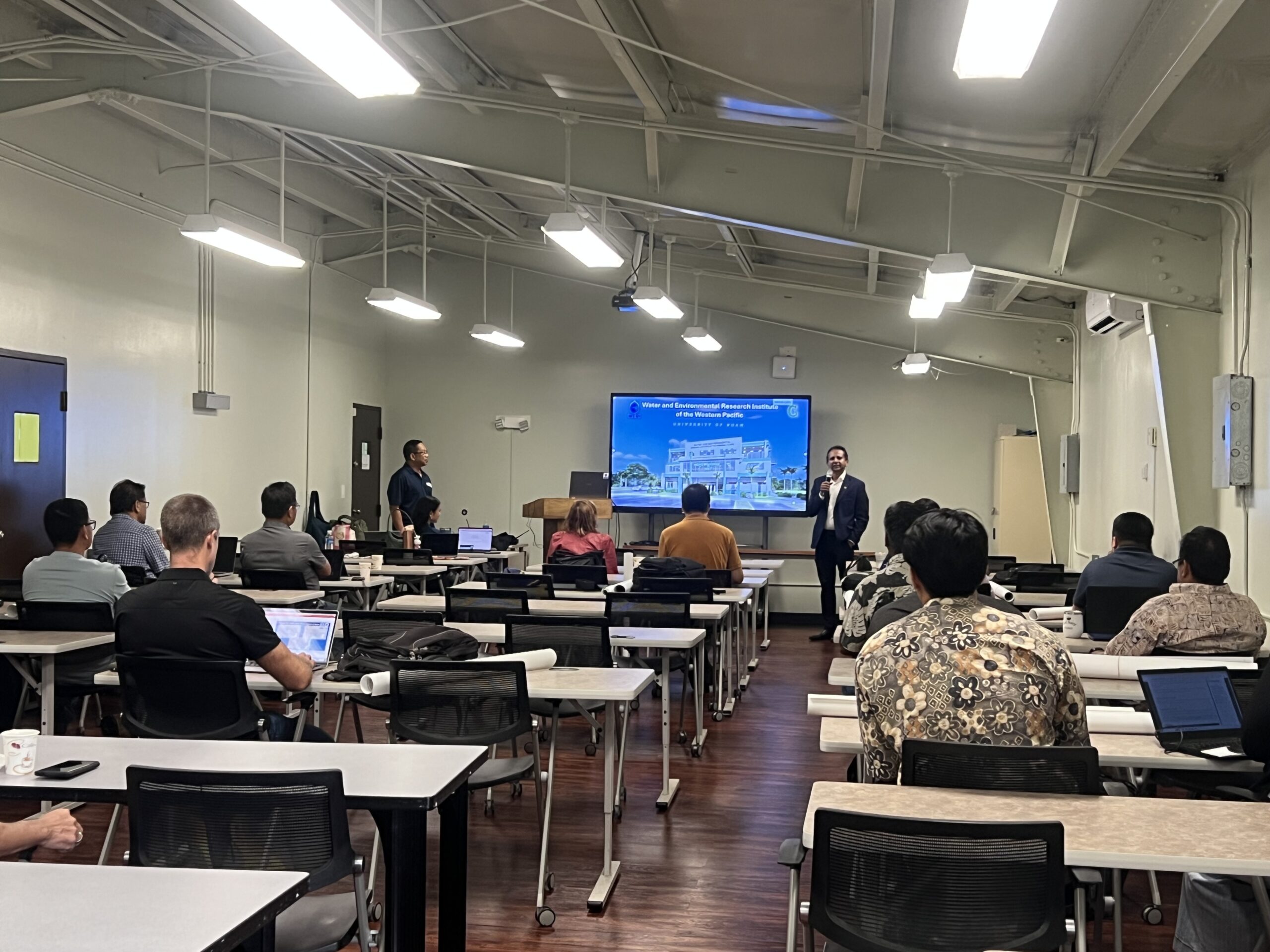
WERI assists USEPA and GEPA with dieldrin sources investigation
In October, Lucrina Jones (Superfund Project Manager, USEPA, Region 9) reached out to Dr. Habana (WERI) to assist with her investigation into potential sources of Dieldrin. Habana shared several WERI Hydrologic Web MApps (in the Guam Hydrologic Survey website, P.L. 24-247) and Google Earth historic imagery to look into run off, terrain analysis, surface and sub surface hydrology for potential sources.
Jones advised Guam EPA, Chief Engineer Peter Bautista and Science Advisor Captain Elizabeth DeGrange, to reach out to Dr. Habana to share the hydrologic information. GEPA and WERI met early in December to look into the surface and subsurface hydrologic maps and to prepare for a scheduled follow up legislature hearing on dieldrin issues. Habana and WERI Research Assistant, Mary Clare Snaer, refined the maps for DeGrange’s presentation to the Guam Legislature – Confirmation and Joint Oversight Hearing Senator Jesse A. Lujan (December 11, 2025).
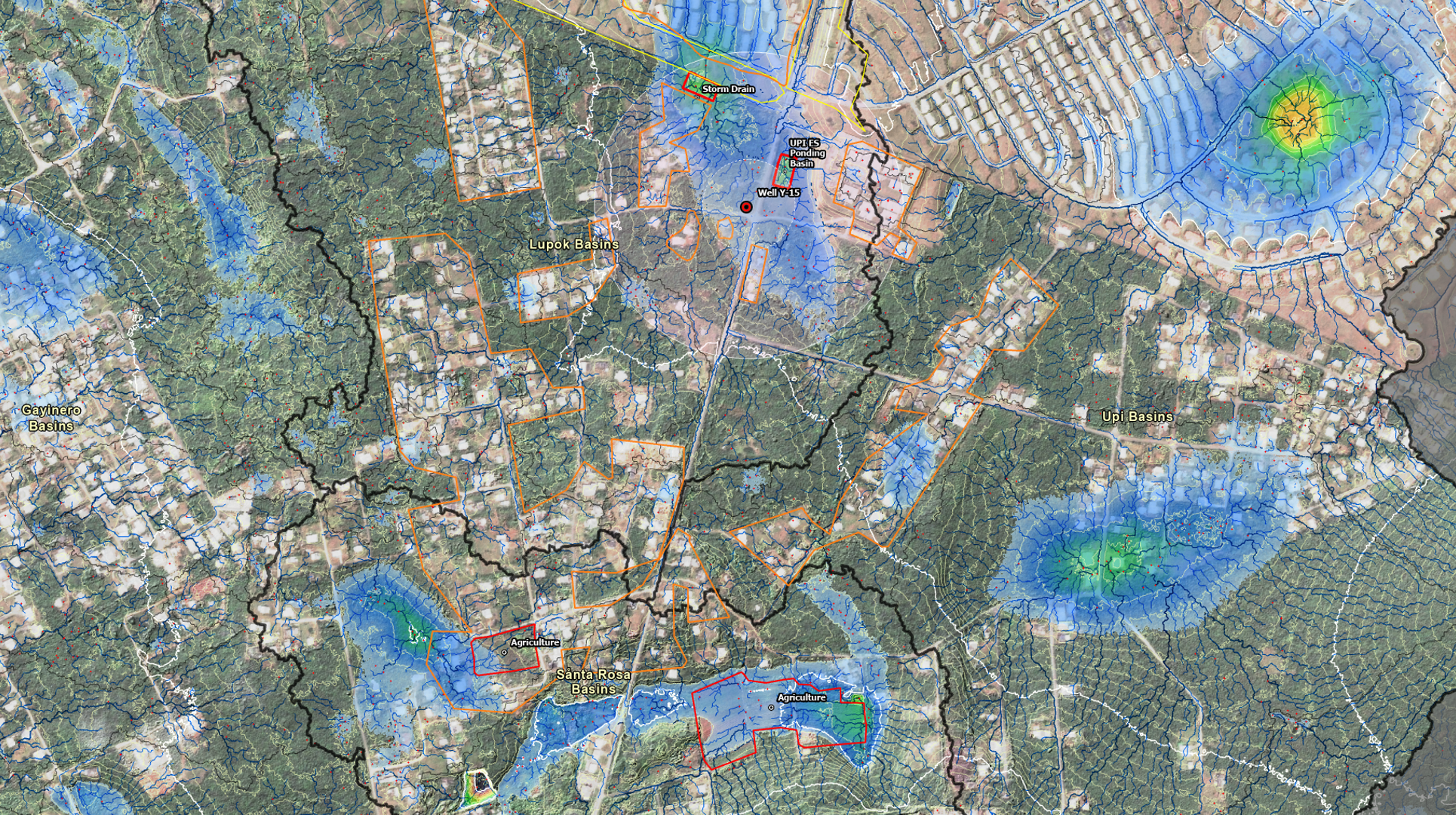
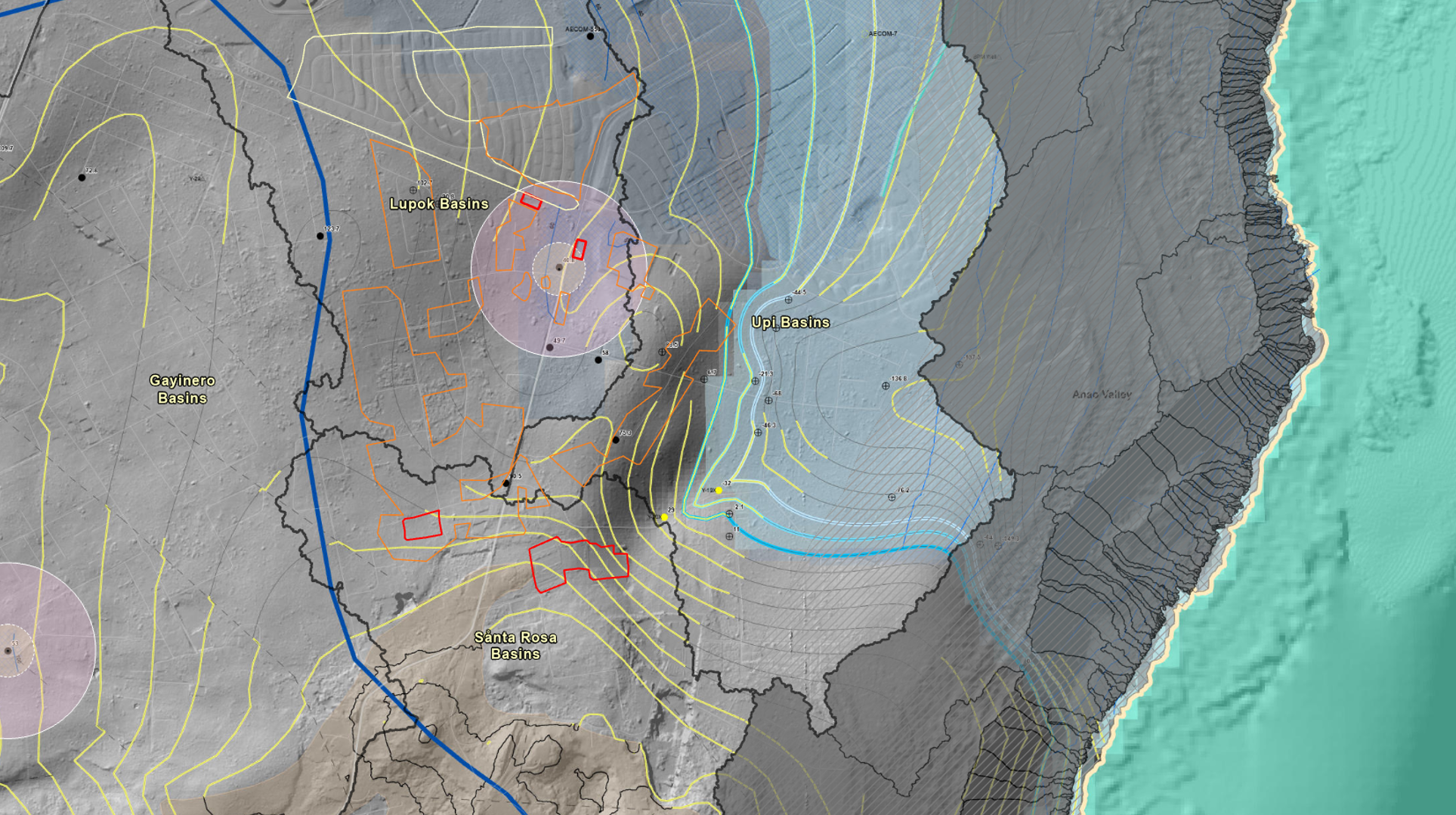
Click to enlarge images of WERI’s Hydrologic Web MApps.
View the Web MApps library on the Guam Hydrologic Survey website, here.
Surface hydrology maps of Lupok and Sånta Rosa Plateau Basins
Unlike production wells in the freshwater lens of the Northern Guam Lens Aquifer, Y-15 is a suprabasal well—well in a groundwater pocket that is in the limestone and on basement contact and high above mean sea level. Well Y-15 is in the Lupok Plateau Basin and the Upi Aquifer Basin, and has historically produced up to 1 MGD with incredibly low salinity.
Captain DeGrange expressed to continue with similar map investigations for wells D-17 and M-4, and also to collaborate on a Superfund Project to further get insight on the contaminant. The hydrologic maps may be useful, especially runoff paths to surface depressions (recharge zones), with guiding the investigation and determining sites for testing soils and runoff.
Dieldrin and Y-15
After the GEPA Interim Action Level (IAL) for Dieldrin (> 0.2 μg/L) took effect on August 1, 2025, GWA Production Well Y-15 was tested and exceeded the action level. September 8, 2025, GWA issued a “Do Not Drink without Treatment (DNDT),” advisory. A state of emergency declaration soon followed.
GWA is now using an interim treatment system at Y-15. After four weeks of testing negative for dieldrin, DNDT was lifted on November 13, 2025. Wells D-17 and M-4 are now offline, and installation of treatment systems for both are in progress.
Latest News
Email
Print
WhatsApp
LinkedIn
Facebook
Twitter